
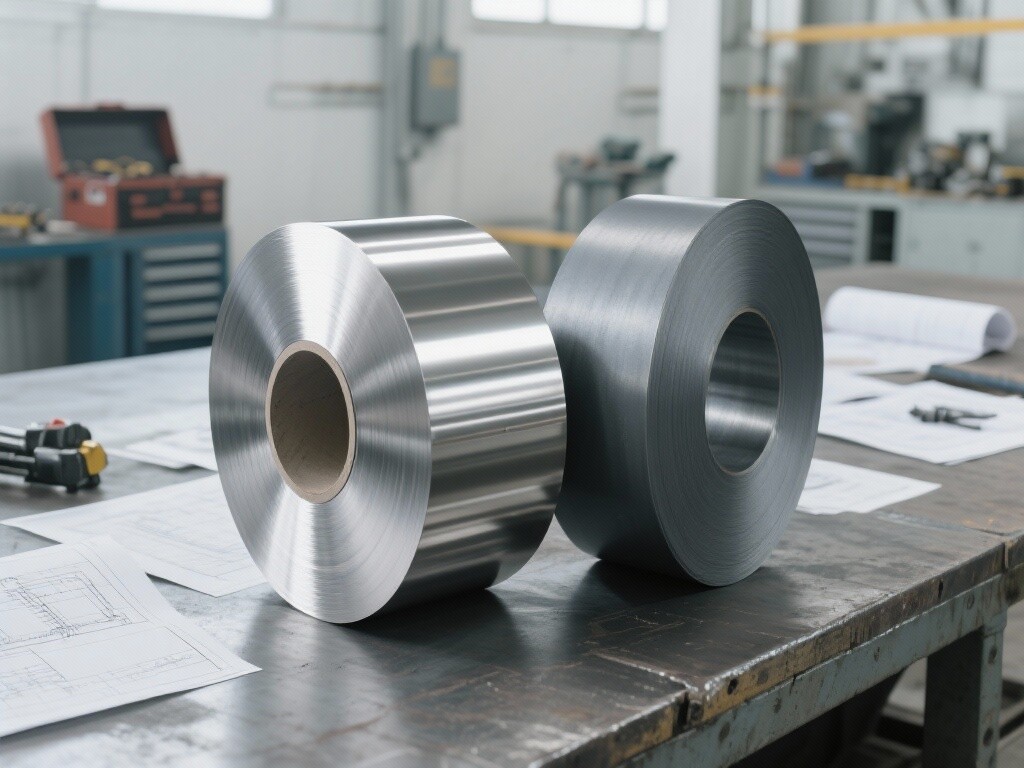
Stainless Steel Coil vs. Carbon Steel: Which is Right for Your Project?
Choosing between stainless steel coil and carbon steel for your project? This comprehensive guide compares their key properties, applications, and cost-effectiveness. As a premier supplier of stainless steel pipe, color coated coil, and stainless steel coil products, Hanwu Steel breaks down the critical factors to consider - from corrosion resistance to structural strength - helping industrial buyers make informed material selection decisions.
1. Material Properties: The Fundamental Differences
When evaluating stainless steel coil versus carbon steel, the primary distinction lies in their chemical composition. Stainless steel contains a minimum of 10.5% chromium, which forms a passive oxide layer that provides exceptional corrosion resistance. This makes stainless steel coil products ideal for environments exposed to moisture, chemicals, or extreme temperatures. Carbon steel, while lacking chromium, offers higher tensile strength and is more malleable during fabrication processes like welding or machining. The carbon content typically ranges from 0.05% to 2.1%, directly influencing hardness and ductility.
From a metallurgical perspective, stainless steel coils maintain their structural integrity across wider temperature ranges compared to carbon steel. Austenitic grades (300 series) demonstrate superior performance in cryogenic applications, while ferritic and martensitic varieties serve specific industrial needs. Carbon steel's thermal conductivity makes it preferable for heat exchangers, though it requires protective coatings when used outdoors. Both materials comply with international standards like ASTM A240 for stainless steel and ASTM A36 for carbon steel, ensuring quality benchmarks for industrial applications.
2. Application Scenarios: Where Each Material Excels
The choice between stainless steel pipe materials and carbon steel becomes clearer when analyzing specific operational environments. Stainless steel coils demonstrate clear advantages in corrosive settings such as coastal areas or chemical plants, where their chromium oxide layer prevents rust formation. Color coated coil products often utilize carbon steel as a base material, with protective zinc or polymer layers adding corrosion resistance at lower costs than stainless alternatives. For structural applications requiring high load-bearing capacity without exposure to harsh elements, carbon steel provides cost-effective solutions.
3. Cost-Benefit Analysis: Long-Term Value Considerations
Initial procurement costs significantly favor carbon steel, typically priced 30-50% lower than comparable stainless steel coil products. However, total cost of ownership calculations must account for maintenance, longevity, and performance factors. Stainless steel's corrosion resistance eliminates recurring expenses for protective coatings or replacement parts in aggressive environments. The material's durability often justifies the premium for applications like:
- Marine infrastructure exposed to saltwater
- Pharmaceutical cleanroom equipment
- High-temperature industrial processes
- Architectural features requiring aesthetic permanence
Carbon steel becomes economically advantageous for temporary structures, interior components, or applications where regular maintenance is feasible. Projects with tight budgets but demanding strength requirements frequently opt for carbon steel with supplemental treatments like galvanization. The emergence of advanced stainless steel alloys has narrowed performance gaps, offering intermediate solutions between traditional carbon steel and premium stainless grades.
4. Technical Performance Comparison
Mechanical properties reveal critical differences impacting material selection. Stainless steel coils generally exhibit:
- Yield strength: 30,000-80,000 psi (varies by grade)
- Elongation at break: 40-60%
- Hardness: 150-300 Brinell
- Thermal expansion coefficient: 9.6-10.8 µin/in-°F
Comparatively, carbon steel demonstrates:
- Yield strength: 36,000-100,000+ psi
- Elongation at break: 15-25%
- Hardness: 120-300 Brinell
- Thermal expansion coefficient: 6.5-7.3 µin/in-°F
These characteristics translate to practical implications during fabrication and service life. Stainless steel's lower thermal conductivity makes it preferable for temperature-sensitive applications, while carbon steel's higher modulus of elasticity benefits structural rigidity. Weldability varies significantly between materials - austenitic stainless steels generally weld more easily than martensitic carbon steels, though both require proper technique to prevent weaknesses.
5. Industry Trends and Future Developments
The global steel market shows increasing demand for specialized materials balancing performance and sustainability. Stainless steel coil production has grown 3.8% annually, driven by:
- Stricter environmental regulations requiring corrosion-resistant materials
- Infrastructure investments in water treatment and renewable energy
- Advancements in lean duplex stainless steels offering cost savings
Carbon steel maintains dominance in construction and heavy industry, with innovations focusing on:
- High-strength low-alloy (HSLA) variants reducing weight
- Improved coating technologies extending service life
- Recycling infrastructure development enhancing sustainability
Manufacturers like Hanwu Steel now offer hybrid solutions, such as carbon steel cores with stainless steel cladding, combining structural affordability with surface protection. The growing preference for color coated coil products reflects market demand for materials delivering both functional and aesthetic benefits.
6. Why Choose Hanwu Steel for Your Steel Requirements
With decades of expertise in steel manufacturing, Hanwu Iron and Steel (Shandong) Co., Ltd. provides unmatched value through:
- Comprehensive product range including stainless steel pipe, coil, and sheet
- Strict adherence to international quality standards (ISO, ASTM, EN)
- Custom fabrication capabilities for specialized applications
- Competitive pricing with volume discounts for large projects
- Technical support from material selection through installation
Our metallurgical experts help clients navigate the stainless steel versus carbon steel decision based on project specifications, environmental factors, and lifecycle cost analysis. Contact our sales team today for personalized recommendations and quotes tailored to your industrial needs.
First class quality service and professional after-sales team.
In order to provide you with suitable products, please provide us with information
Get in Touch
We respect your confidentiality and all information are protected.